In our study group (1) we started an interesting discussion on ways to prepare religions for this possible realization that we are far from alone in this universe. That there are indeed infinite amounts of people and species in numerous forms living in countless star systems and that we are only one of the them. What would such a realization mean for institutionalized religions? How would religions like Christianity, Judaism or Islam deal with such a paradigm shift? And what about Buddhism and Hinduism? Would they perhaps be better prepared? How ‘galactic-proof’ are religions?
This article reflects on a few issues related to this question, as a starter for more to come. Wouldn’t it be great if we could find ways to pick the beautiful and wise elements from religions, and leave behind the distortion, in order to prepare ourselves for this huge new realization? Perhaps this could help in bridging the minds of Christians to incorporate this galactic-proof variant? And, who knows, perhaps we can offer some wisdom to those visiting our shores from our religions?
ANGELS AND DEMONS
In an earlier article from 2025 we touched upon one aspect related to this question of how to incorporate extraterrestrial life into the people who have been raised as a Christian (2). In March 2026, Vice President J.D. Vance shared his ideas about extraterrestrials, who he thought probably were some kind of demons (2).
THE BIBLE
When thinking about Christianity, the Bible is a logical place to look when you want to learn more this religion. Unfortunately there is a lot of discussion on the Bible and the various books in it. It seems to be a rather arbitrary selection that was made a few hundred years after the life of Jesus Christ (3).
So we have a number of books that made to the next round, and a number that didn’t. We also have books that are linked to the so-called Ethiopian bible too. We talked a bit about 1 Enoch in a recent article on the 200 Fallen, for instance (4). Then there also are all kinds of interpretations by Christian mythics (1) that didn’t end up in the Bible.
On top of all that we have the differences between all kinds of denominations and interpretations. We have the Protestants, Catholics, Jehova’s etc. For an outsider I think it would look quite messy. When it comes to the bible there are also are various translations and of course there is this distinction between the Old Testament and the New Testament.
THE ALL-OR-NOTHING PHENOMEMON
When studying perspectives it is useful to be able to study certain elements separately. Take for instance the paradigm of Elena Danaan: she has said a lot of things, and I like to analyze them separately; it could be that certain elements are more reasonable than others, and for me there is no need to either ‘believe’ everything or nothing (5). It seems that within religions this is not as easy. It feels as if there is a ‘package’ that you either accept or not. There is no in-between.
It’s a bit like what Joan Osborne sang in her song ‘One of Us’: “If God had a face, what would it look like, and would you want to see, if seeing meant that you would have to believe in things like heaven, and in Jesus and the saints, and all the prophets?” (6)
This ‘all-or-nothing’ -phenomenon makes it hard to talk to certain people within the Christian community. When someone would open up to discarding a certain element within their religion, it might easily imply that it is a kind of blasphemy. A true Christian doesn’t question anything that is written in the Bible.
SOME CHRISTIAN ELEMENTS
Having said all this, I am going to share a few elements that many would link to Christianity and their belief system, or theory. People who are open to evaluating certain separate elements can decide which element they like and which they don’t. It can also be a good way to wonder how ‘galactic-proof’ or ‘extraterrestrial-proof’ these elements are. Would they still be valuable once a civilization has embraced the reality of extraterrestrial life and a universe filled with people and ‘gods’?
I am no Theological Scholar; my aim is to just introduce a few elements and wonder how ‘galactic-proof’ and valuable they are
- Holy Trinitiy – The Trinity is one of the central and most distinctive doctrines in Christianity.
Main Concept in Simple Terms: The Trinity teaches that there is one God who eternally exists as three distinct Persons: God the Father, God the Son (Jesus Christ) God the Holy Spirit. These three are not three separate gods, but one single God in three Persons. They are co-equal, co-eternal, and of the same divine essence (substance) (7). - Love other people like you love yourself
- An angry god that casts the first two people out of Eden where he curses them both because they were disobedient and wanted to eat from the tree of Knowledge (to learn the difference between what is right and what is wrong)
- A God that has designated a group of people as his chosen people
- A God that has flooded the complete world in order to do a reset
- The Concept of a ‘Son of God’ that dies on a Cross and then resurrects after three days to finally ascend with body and all to the skies.
- The concept that Jesus has died for our sins.
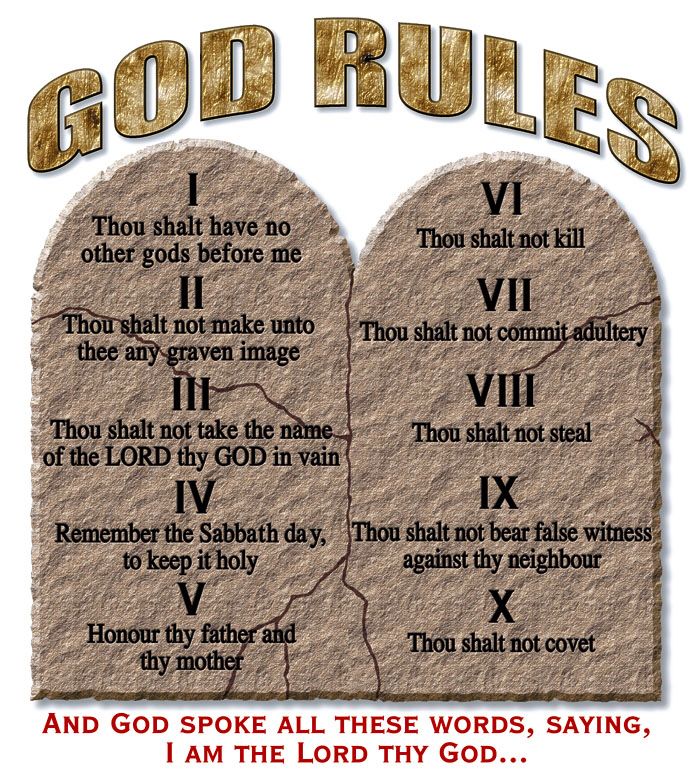
- The Ten Commandments (9)
SOME REFLECTIONS
I could add a lot of other Christian elements to the whole, and I want to invite people to add a few more positive ones, but I have to say that I really wonder what elements really are galactic-proof? The god from the Old Testament comes across as a jealous, aggressive and angry god who threatens, curses and kills his people. A god that wants to make sure that his people follow him, and not some other god. (10) Fear seems to be a common theme. The god in the New Testament sounds a lot better. Perhaps a good first step to make Christianity ‘galactic-proof’ would be to discard much of the Old Testament?
What are your thoughts? How to make Christianity ready for the extraterrestrial age?
FOOTNOTES
(1) On Catholicism, Christianity and Disclosure (a thread in the Galactic Anthropology Study Group on Telegram)
(2) How Religious Concepts can Prevent People from Exploring Extraterrestrial Life
(3) The Council of Nicaea and the Formation of the Biblical Canon
(4) On the Removal of the 200 Ciakahrr-Anachim from Earth in 2026
(5) I like to not ‘believe’ anything when it comes to the articles on Galactic Anthropology. I am only studying the likelihood of certain perspectives and ideas, and what could the benefits of entertaining these extraterrestrial concepts to better understand certain possibilities.
(6) Joan Osborne – One Of Us
(7) https://grok.com/share/c2hhcmQtNQ_22175f7b-83c1-4c90-a1d3-cc1c8453fc81
(8) God Rules
(9) Here are the first two in the longer version from the bible:
– 1 – “I am the Lord your God, who brought you out of the land of Egypt, out of the house of bondage. You shall have no other gods before Me.
– 2- You shall not make for yourself a carved image, or any likeness of anything that is in heaven above, or that is in the earth beneath, or that is in the water under the earth; you shall not bow down to them nor serve them. For I, the Lord your God, am a jealous God, visiting the iniquity of the fathers on the children to the third and fourth generations of those who hate Me, but showing mercy to thousands, to those who love Me and keep My Commandments.
Exodus 20:2-17 NKJV (The Ten Commandments)
(10) We have spoken about the Old-testament god a few times before and I wouldn’t be surprised if that god turns out to be have been some malicious Anunnaki god. See (11-13) for more on this.
(11) Is it Blasphemous to say God is an Alien?
(12) Some Doubts about the Enlil-Yahweh-vibe
(13) Anu, Enlil and Enki and the Meeting with the Four Councils
 Galactic Anthropology