The Noor and their Colonies

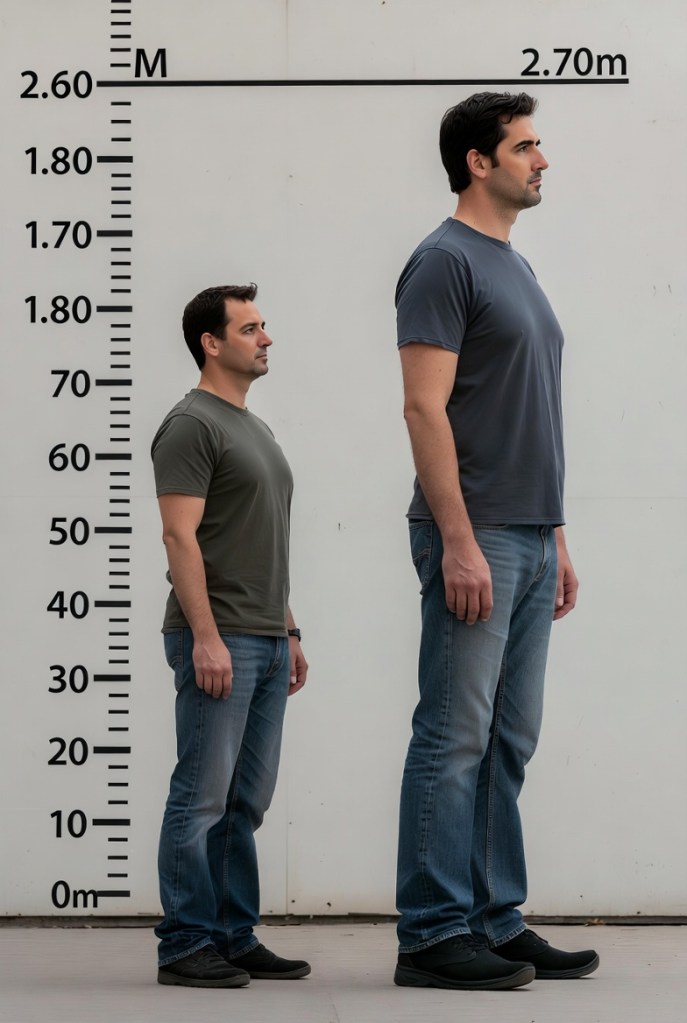
The size of the Noor

podcast version of this article

On this website we explore all kinds of civilizations and species from many star systems, mostly from within our own galaxy. In earlier articles I focused on the humanoid people called the Taal (1), The T-Ashkeru (2), and the Selosi (3) for instance. This article provides an overview on one of the orginal humanoid species that would have been seeded in the Kepler 62 system (4), namely the Noor.

THE NOOR
Four main humanoid species spread out across our galaxy, mostly as the result of the raid of the Ciakahrr (5) on their home world in the ‘Man-system’ (4) in the Lyra Constellation. As you can see in the image below, the Noor are from the 5th planet in that star system, called Tar. An important characteristic of these people is that they are quite tall, some 9ft (2.7 meters).

Their genomes would also have ended up in humanity’s genomes, somewhere in our past (6). Let’s see what we know about where they all settled (7). It’s not yet clear when exactly this great exodus from this star system in the Lyra Constellation occurred.

As so often, each colony has its own story and background. Often people live that long on a certain new planet that their appearance changes due to environmental conditions and sometimes even because of some conscious genetic alterations with the genomes of the locals on that particular planet. They eventually take on a new name to identify themselves with. What follows are many of these accounts of Noor descendants.
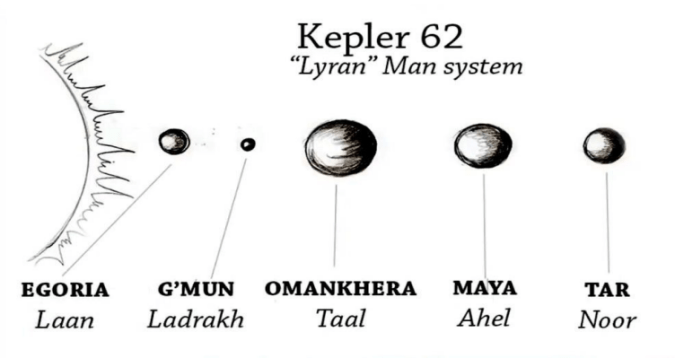
The Planets and the Civilizations that were originally seeded in the Kepler 62 system (8)

THE DAHL FROM BETA CENTAURI
I decided to write this Noor overview after I got to know the Dahl in my journey through the second volume of Elena Danaan’s Encyclopedia Galactica (11). These Dahl had already been mentioned in Elena’s first book (10, p.123). The Dahl moved from their homeworld in Kepler 62 before the arrival of the plundering Ciakahrr. They were a branch of the Noor royal family, who were called the House of Dahl. We can read: “After an altercation with the royal house that resulted in their banishment, the Dahl were forced to leave their planet and find a new destination to establish a colony.” (11, p.116)

They established their own flourishing civilization and didn’t feel any need to join any federation; they chose to mind their own business. They are not part of the Galactic Federation of Worlds (12). You can read more details about them in (11).

A VISIT TO EARTH SOME MILLION YEARS AGO
In the Dahl section we can read that a Noor civilization already visited our planet a million years ago. We have heard about another Kepler-62 civilization before, that also would have paid our world a visit around that time, namely the Laan. For more on this aspect, see (13).

THE ASBAN-HU
A Noor colony thought they could establish a new colony in the Rigel systems in the Orion Constellation, together with some Ahil neighbors from Maya, the fourth planet in the Kepler 62-constellation. This, however, didn’t end up very well. They were terrorized by a nasty group of Reptilian species, called the Grail, who even forcefully genetically altered them into some slave-race. You can find all the details, including the recent positive turn of events at (14).
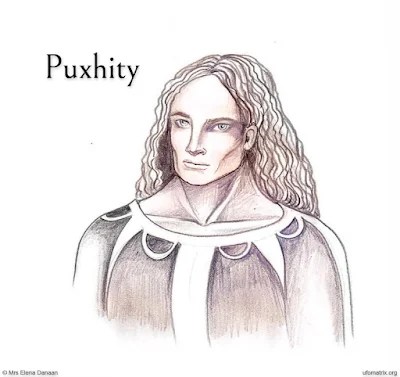
Illustration of the Puxhity by Elena Danaan (10, p.208) and (17).

THE PUXHITY AND THE OLMECS
One Noor colony that fled the Lyran Wars (15) asked the Ozman (16) on a planet in the Vega system if they could share their planet with them, and the Ozman welcomed them. They peacefully co-exist. They started to call themselves the Puxhity. We are told that they have developed red hair. You can find a separate page on the Red Haired Giants elsewhere (18).

These people would also have the ones that we got to know on Earth as the Olmecs from Central and South America. Some 2,000 Puxhity would have lived on our planet at a certain moment in time. The name ‘Olmeeka‘ is the local name of the star that we call ‘Vega’.

We mentioned the Puxhity as well on the page that is dedicated to species that are related to the Vega star system (19).

THE NOOR IN THE TAYGETA SYSTEM: THE ALKHORHU
In the Taygeta (Ashaara) star system in the Pleiades we can also find a Noor colony. This star system also houses an Ahel colony on a planet called Erra (20) and a Taal-colony on the planet T’Mar (10, p.337). The Noor live on the fifth planet called Alkhorat and they took on the name ‘Alkhorhu‘ (10, p.258). Here’s a bit more about this colony: “The Alkhori live as long as the Ahil and Taali, that is to say between 500 and 700 [earth] years, but a genetic alteration occurred due to the successive changes of habitat conditions. You remember, the Noori people like to travel. This unfortunate alteration is such that their internal organs fail as they do not grow as fast that their body envelops. In general the heart fails first” (10, p.258).

Well, let’s hope this condition is not very frequent and that they will manage to deal with this issue soon. We have heard a lot about great geneticists in this galaxy.
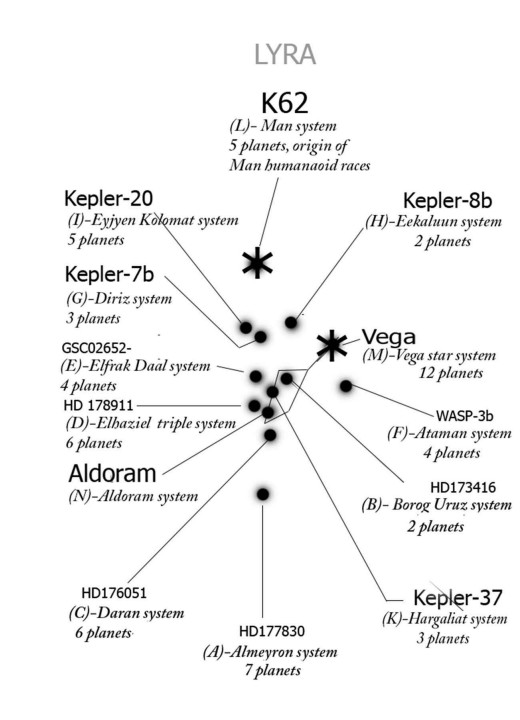
Overview of Lyran star systems that probably are inhabited (10, p.336) (21)

A NOOR COLONY IN THE LYRA SYSTEM: THE ELHAZIEL SYSTEM
We don’t know a lot about this Noor colony in the Lyra system. They are briefly mentioned on page 190 in A Gift from the Stars and that’s about it. Perhaps one day we will learn more about them.

THE METON FROM PROXIMA CENTAURI
I was surprised to learn that our well known Metoni from our neighbors in the Proxima Centauri star system. The Meton are well known guests on this website. “Metoni are of the ‘Noor’ Lyran group-species. They are tall, non-belligerent humanoids, whose lifespan reaches up to nearly 2000 Terran years.” (10, p.124). You can find out more about them in various articles (22-25)

THE ELDARU FROM PROCYON
In a previous article (26) we already mentioned the Eldaru, a Noor colony that fled the Rigel star system in the Orion War where they were attacked by the Grail (just like their fellow Noori, the Asban-Hu (see above)). They found refuge on the fourth planet in the Procyon system, where the Grail also managed to track them down. You can read about the impressive way they succeeded in evading these Grails at (26), or you can get an idea of it by reading about the Sattar in the next section.

THE SATTAR FROM THE CAELUM CONSTELLATION
A star system that we have categorized as ‘ Wasp 159’ in the Caelum constellation houses the Sattar, who are related to the Noor Eldaru (see section above). “Like their Procyon relatives, the Sattar have the ability to jump frequencies, appearing and disappearing at will. This can be quite disconcerting if you are not used to it. They are a peaceful culture interested in science and cultural diversity.” (27, p.238).

THE OROGUNI FROM THE AQUILA CONSTELLATION
On the star system ‘HD 183263’, locally known as Sayuni, we can find the Oroguni, a human culture whose origin is unknown, although it is hypothesized that they are probably related to the Noor. It must be because they are 7 feet taal, have pale skin and have red hair. “The peculiarity of these people is that they live a cold methane atmosphere and must wear helmets when visiting carbon-based cultures.” (27, p.106)

What would their biology look like, if they are not carbon-based? We have explored species that are said to be silica based (28), and copper-based (29). Sometimes it turned out to mean that their blood cells use copper or silica instead of iron, like we do. I wonder how methane has influenced these Oroguni.

THE ONOORI IN THE KORENA SYSTEM IN THE BOÖTES CONSTELLATION
In the first volume of Elena’s Encyclopedia Galactica (27) we are introduced to another red-haired Noor colony, namely the Onoori. They also fled from the K62 Man System after the Lyram Wars. “These Noor colonists [8 foot tall], the Onoori, left their world, Tara (or Tar), in a small ship carrying only twelve of them. Ronan IV was a world inhabited by primitive cultures who greeted the celestial visitors with some awe and some fear. Over time, the Onoori developed cities, a space fleet, and became a prosperous and powerful civilization. They are members of the Galactic Federation of Worlds.” (27, p.206).

SOME REFLECTIONS
Whenever I come across another Noor-related species, I will add them to this page. It is obvious that they have been around in our galaxy. The huge Noori were also mentioned in the context of the ‘order of introduction’ of the various species in our process of getting acquainted with extraterrestrials (30). After the Selosians, the Noori would be part of the second group of humanoids that look different than we do, but not extremely different, yet.

So much for the Noori. If you would like to reflect about these extraterrestrial matters, be sure to join our Study Group (31).

The size of the Noor

FOOTNOTES
(1) The Taal and their Colonies
(2) The T-Ashkeru and their Colonies
(3) The Selosi and their Colonies
(4) The Kepler 62 Man System: Then and Now
(5) The Ciakahrr
(6) Our Galactic and Intergalactic Genomes
(7) In preparation for this article I created a thread in the Galactic Anthropology Study Group
(8) The Kepler 62 Star System (snapshot from SNN 57 (9), also at (A Gift from the Stars (10), p.337))
(9) STAR NATION NEWS 57 ~ 16 12 2024
(10) Danaan, E. (2020) A Gift from the Stars (the image can be found on page 337).
(11) Danaan, E. (2025) Encyclopedia Galactica, volume 2 
(12) The Galactic Federation of Worlds
(13) The War between the Laan and the Anunnaki
(14) The Return of the Asbaan-Hu to Oriban
(15) What Came First? The Lyran or the Orion Wars?
(16) The Ozman as Skillful Peace Ambassadors
(17) The Puxhity – Descendants of the Noori Legacy on Planet Ozma in Vega
(18) The Red Haired Giants from a World near Vega (and other worlds)
(19) Species Related to the Vega Star System in the Lyra Constellation
(20) We once talked a flower from this planet at: The Vanilla-like Smell of Flowers from Erra. You can find more links on Erra on that page.
(21) It was in a transcript from Sam Mast that I found this Lyra diagram. You can also find it at (10, p.336). I suppose Elena picked out these star systems in the Lyra system because they contain planets that harbor intelligent star faring life.
(22) Having a Life Span of Two Thousand Years – The Metoni in the Proxima Centauri System
(23) Delving into the History of the Meton: Venus, Earth and Mars (and some dinosaurs)
(24) On Meton Walls, Windows and Doors
(25) A New Colony from Alpha Centauri to Settle on Mars
(26) The Eldaru, the Sattar and their Ability to Jump Frequencies
(27) Danaan, E. (2024) Encyclopedia Galactica, volume 1 
(28) Silicon-based Humanoids
(29) Exploring Copper-based Life Forms
(30) In which Order will Extraterrestrials Introduce Themselves to Us?
(31) Telegram groups: Galactic Anthropology (general updates), Galactic Anthropology Study Group (most active group with hundreds of separate discussion topics) Alex Collier Study Group and the Galactic Anthropology Library. Elena Danaan also has her own telegram channel and even her own open telegram chat group. Dr. Salla also runs a Telegram Group. Do you want to help with studying and exposing the Deep State? Join the Gondolath Globalist Narratives Study Group or visit the website: Gondolath Project. You can also follow the alternative side of current events at the Laura Aboli Archive. There’s also a huge Diddy and Epstein group that you can join. Galactic Anthropology tries to spread both the disclosure information and the Deep State Explorations at RedditFacebookX (Twitter), on VKYoutube and on TikTok. Hope to see you soon in one of the groups! Like, share and subscribe.

Species Related to the Vega Star System in the Lyra Constellation

Over the years we have been shown hundreds and hundreds of species from various star systems, mostly from our own galaxy. In order to familiarize myself with them better I have started to write articles that gather certain species that share some characteristic with each other. You can find, for example, posts on the colonies of the Anunnaki (Anachim) (1), the T-Ashkeru (2) or the Taal (3). This current article focuses on the Vega star system in the Lyra Constellation, one of the brightest stars in our night’s sky.

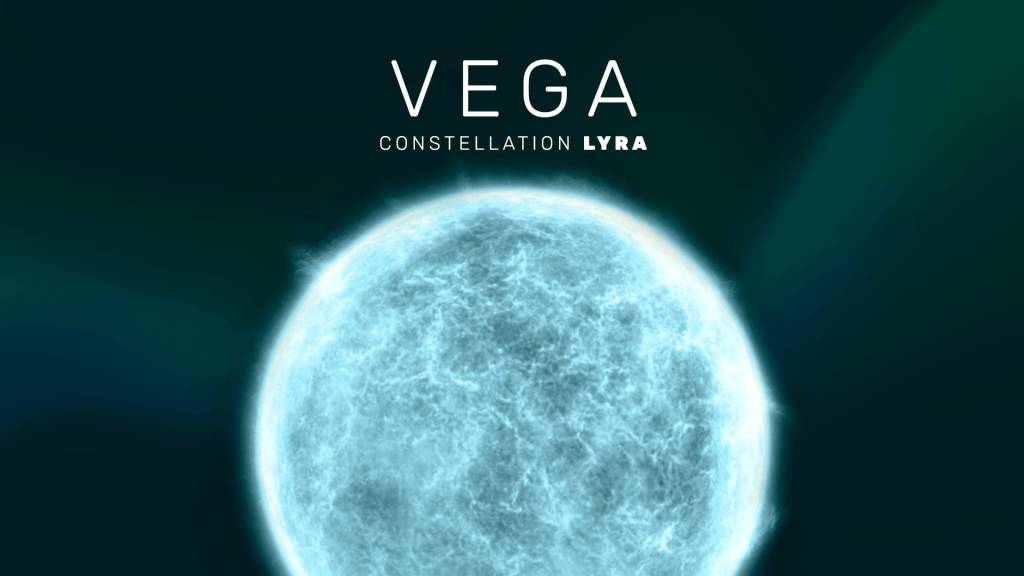
Vega, a blueish-white star in the Lyra Constellation (4)

VEGA
This star is locally known as Olmeeka (5). Twelve planets that all are inhabited orbit the star. When Vega is mentioned in the various articles it is often in the context of it having been some kind of transition hub for people fleeing from the Lyran Wars (6). Overpopulation has made people leave this system in order to find a different and less crowded place to settle. Vega itself has a fast rotation rate of 12.5 hours (whereas our sun takes 27 days for a rotation) (4).

THE VEGA ALLIANCE
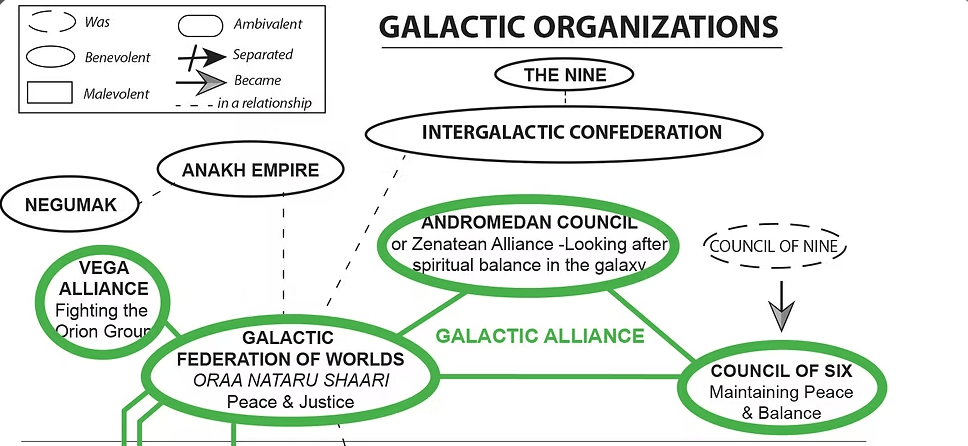
While preparing this article I was surprised to learn about the ‘Vega Alliance‘. Somehow I had missed this alliance altogether. This Alliance was fighting the ‘Orion Group‘ (7). We will go over the various members of this alliance: Adari, Elevar, Ozman, Puxhity, Zenatae, Aramani, Ginvo and the Eldaru (10).

Part of diagram with Galactic Organizations (9)

The Adari (11) are still living in the Vega star system (on the first planet), and are a Taal colony. We have gotten to know them as the blue-skinned people that appear in the Indian Veda’s. The Elevar are an Ahel-colony that settled on the third planet in the Vega system (12). A part of these Elevar decided to start yet another colony in the Auriga Constellation (13). The Ozman live on the fourth planet and they had already settled in the Vega system before the start of the Lyran Wars (14).

The Puxhity are a Noor colony that did flee from the Lyran Wars to settle on the same planet where the Ozman had already chosen to live. These Puxhity are best remembered as the Olmec (named after their Vega star called Olmeeka) by various people in south and central America. They were the legendary red-haired giants.

Illustration of an Olmec Statue (16)

It was overpopulation on the planet that led a group of the Taal, who were living on the same (first) planet of Vega as the Adari, to pack up their galactic bags and find a new home in the Andromeda Constellation, in a star system called ‘Titawin’ (17). When people talk about ‘the Andromedans’ they mostly refer to these people that named themselves the ‘Zenatae‘. Elena has shown us that there are way more civilizations, including Reptilians and Ahel colonies that also live in the Andromeda constellation. With that same logic they should be called ‘Andromedans’ as well.

The Vega Alliance also holds the Aramani from the Tau Ceti star system as its members (18): It seems that although they are part of the Vega Alliance, they themselves didn’t use Vega as a springboard into the galaxy, like many other Lyra/Man refugees did (19). The Ginvo (20) who are also members of the Council of Alnilam (21) are from the star system we know as Procyon, just like the last civilization in this list, the Eldari (22).

COLONIES FROM PEOPLE THAT LEFT THE VEGA SYSTEM
If your brain is not yet boiling from all these galactic people who are part of the Vega Alliance, we have got a number of people who used to live in the Vega System but decided to leave and colonize new worlds, often uninhabited worlds, but sometimes they co-existed with other local species. Let’s see if we can find a few that fit in this category; most of them would have left Vega because of overpopulation issues.

THE ARGUNTI
The Argunti are an off-shoot of the Elevar who moved to the Auriga constellation to settle on a planet called ‘Gem 5 Argun’ where they had to live with a reptilian-looking mammalian species called the ‘Fiachru‘ (12). They both are members of the Galactic Federation of Worlds (23). The Argunti also are ahel-descendants. You can find more about them in the Encyclopedia, volume 1 (pp. 168-169). They didn’t leave the Vega system because of the overpopulation issue, but because of a major conflict the have had with their Taali neighbors.

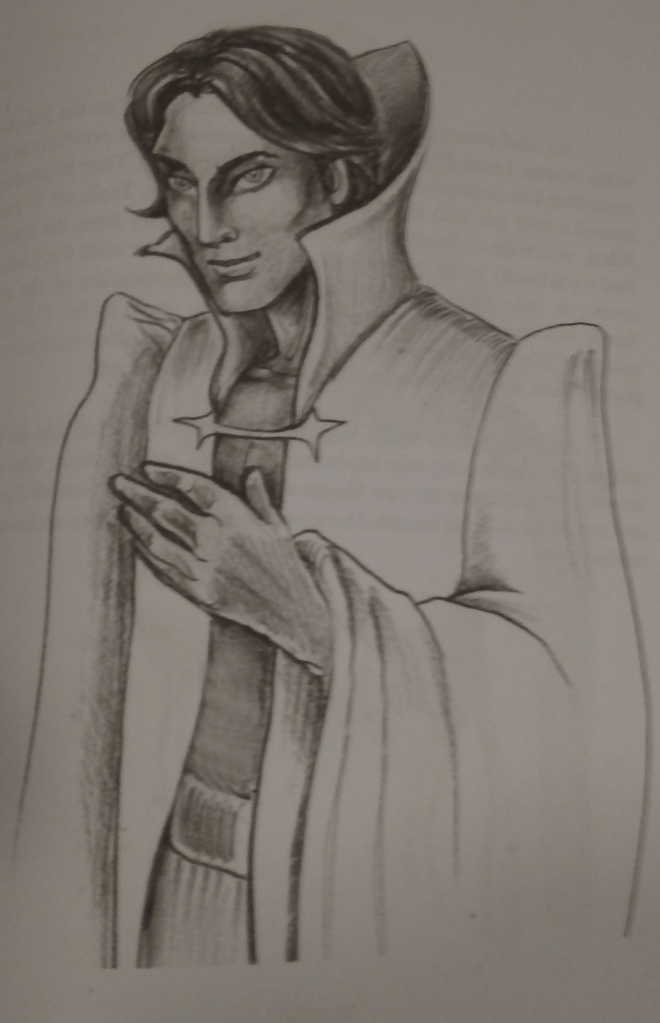
A Vantaal woman (24)

THE VANTAAL
The Vantaali have a remarkable story to tell: first they had to flee from the Man-system in the Lyra constellation. They seeked refuge on two different planets in the Orion Zone, where they were confronted with the Nebu Empire, which caused them to flee again, this time to a planet in the Vega system. Due to the overpopulated Vega system, they decide to pack once again to finally settle in the Bootes constellation on the fifth planet in the Korena star system. During their various stays they hybridized themselves with some local species.

The Vantaal (taken from SNN76, 24)

THE MWYDIN MENDORA
This dark-skinned Taal-descendants was also described in one of the episodes of Star Nation News (25). They belong to the category of former Vega inhabitants that decided to leave because of the overpopulation issue there. They settled on a moon Mwydo that orbits a gas planet in the Sephusa System (Gliese 2056) in the Canis Major constellation. The video excerpt below can also be found in the page on Titan, a moon from Saturn, where they would also have a colony (26).

On the Mwydin Mendora – Former inhabitants of the Vega System (25)

THE KATAYY
The Katayy also have Taal ancestors, and they are said to have lived on Vega as well, before they established a new colony in the Sirius A star system. You can watch a video of them in the page that collects the various Taal colonies in our galaxy (27).

T-ASHKERU
The (Taal)-Ashkeru (28) are a hybrid species from the Katayy (Taal) and a local, now extinct, species in the Sirius B system (29). You can read all about the T-Ashkeru and their colonies in another ‘review’-article (28).

SOME LOOSE ENDS
In order to finally round up this rather big list of species that are somehow related to Vega, I want to mention the extraordinary link with the Akhori. We know them mainly from their rather malevolent practices from their home base in the Altair system (30), but apparently these Akhori don’t have any link with the Lyra system, as they would have been seeded separately, both in the Altair system and in the Vega star system by the Intergalactic Confederation, right after the seeding in the Man system (31).

Illustration of a Katayy woman (35)

Another remarkable story is from an alleged member of the Secret Space Program, called John Whitberg, who writes about a Dark Fleet colony that would exist on one of the planets orbiting Vega. It was a bit too deviant for me, but perhaps you do like it. Check it out at (32). Debbie Solaris regarded Vega as the cradle for humanity in this galaxy (33). It seems she was pretty close, at least when you compare it to the Elena Danaan perspective.

And thus we have come to the end of this Vega Review. The system is obviously teeming with life, and quite a number of species lived in the system before moving on to create a new life on another planet. What are your thoughts on all these galactic anthropological accounts? Share them in one or more of our groups (34).

FOOTNOTES
(1) The Colonies of the Anunnaki/Anakh in our Galaxy
(2) The T-Ashkeru and their Colonies
(3) Taal Colonies in our Galaxy
(4) https://starwalk.space/en/news/vega-star
(5) The Real Names of Various Stars – How they are called by their own People
(6) The Kepler 62 ‘Man’ System in the Constellation of Lyra: Then and Now
(7) Would the Orion Group be the same as the Alliance of the Six (8) or the Nebu?
(8) The Nebu (and the Alliance of the Six)
(9) Galactic Alliances
(10) Danaan, E. (2021) A Gift From the Stars
(11) Where did the Blue Gods of India come from?
(12) The Elevar from the Vega System
(13) In Encyclopedia Galactica, volume 1 Elena Danaan describes this Elevar colony changing their name to the Argunti (see p.168)
(14) The Ozman as Skillful Peace Ambassadors
(15) The Red Haired Giants from a World near Vega (and other worlds)
(16) The World of the Ancient Olmecs and Their Fascinating Culture
(17) The Zenae from the Andromeda Constellation
(18) Tau Ceti Time
(19) This concept of ‘springboard’ reminded me of another springboard that is a lot closer to home, namely the Lunar Trampoline 🙂 – See: Lunar Operations Command – A (Former) Trampoline into Outer Space
(20) The Ginvo from Procyon
(21) The Council of Alnilam
(22) The Eldaru, the Sattar and their Ability to Jump Frequencies
(23) The Galactic Federation of Worlds
(24) STAR NATION NEWS 76 ~ 02 06 2025
(25) Star Nation News 93 ~ 10 11 2025
(26) Human Civilian Scientists Working on Research Facilities on Saturn’s Moon Titan
(27) Taal Colonies in our Galaxy
(28) The T-Ashkeru and their Colonies
(29) Sirius B (Thula)
(30) The Markhat Collective from Altair
(31) See Danaan, E. (2024) Encyclopedia Galactica, volume 1 page 95.
(32) A Nachtwaffen Colony on Vega Prime?
(33) Debbie Solaris and Lyra/Vega
(34)  Telegram groups: Galactic Anthropology (general updates), Galactic Anthropology Study Group (most active group with hundreds of separate discussion topics) Alex Collier Study Group and the Galactic Anthropology Library. Elena Danaan also has her own telegram channel and even her own open telegram chat group. Dr. Salla also runs a Telegram Group. Do you want to help with studying and exposing the Deep State? Join the Gondolath Globalist Narratives Study Group or visit the website: Gondolath Project. You can also follow the alternative side of current events at the Laura Aboli Archive. There’s also a Diddy and Epstein group. Galactic Anthropology tries to spread both the disclosure information and the Deep State Explorations at FacebookX (Twitter), on VKYoutube and on TikTok. Hope to see you soon in one of the groups! Like, share and subscribe.
(35) STAR NATION NEWS 63 ~ 03 02 2025

Where did the Blue Gods of India come from?

Watch a video of this article

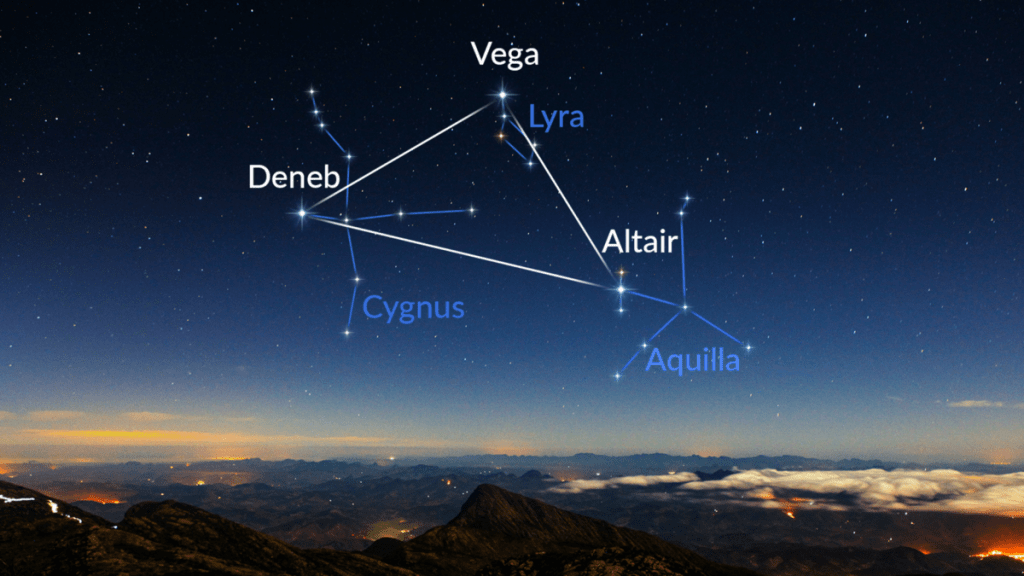
Locating Vega in the Night’s sky – The Summer Triangle (1)

Yesterday I noticed a number of people from India who were visiting this website. I decided to see if there was anything interesting to say about the connection between certain star races and India, and there certainly is a very intriguing link.

This page talks about a certain group of people from the Star System of Vega and how they are said to be the well-known ‘Blue Gods’ that we know from the Indian Veda’s.

THE CONSTELLATION OF LYRA
Lyra is a constellation that you can find in the eastern sky, especially in the summer (in the Northern Hemisphere). The star that is not part of the parallelogram is called Vega.

We have spoken about Lyra before, since it contains a very special star with the ‘magical’ name of Kepler 62 (2), some 990 lightyears away from us. This star is special because it would have been the birthplace of the humanoid races.

The Star Vega in the Lyra Constellation compared to our Yellow Sun (7)

After the so-called Lyran Wars with the Ciakahrr (3) all humans had to flee the planets orbiting this star. They spread all over the galaxy, some going to the Pleiades, like the Ahel and the Taal, some headed to Epsilon Eridani (4) and another group ended up on planets circling a star that we call Vega, but is known as Olmeeka by the locals. Even though the star is in the same constellation, it is 965 light years closer to our planet (5).

THE ADARI
As Elena Danaan points out in a video that is dedicated to Vega (6), the star is blue. The radiation of the star has had its influence on the dark Taal-skin of the people that live on the first planet (of the twelve that orbit the star) called Adara (8): it would have evolved their skin to brown with blueish shades, depending on how the light touches their skin (8, p.202-203).

An Adari Male – Drawing by Elena Danaan from (8, p. 203)

The people from this planet, the Adari, had an input on Terra in the area of India a long time ago, where they temporarily settled a colony, quickly chased by the Ciakahrr invaders in ferocious conflicts. The Adari in India have been taken for gods with bluish skin and they are still remembered in the vedic texts as the blue race of gods who came from the sky (6)

The Adari are now involved in the program of the Galactic Federation of Worlds to protect Terra. Their ships have beautiful profiled elongated silhouettes” (8, p.202)

In the video Elena says that there are a lot of Adari star seeds, since they are part of the Envoy Program (9). All twelve planets orbiting Vega are said to be inhabited. In the book (or video) you can get to know the Ahel-colony of the Elevar, the Ozman who were already living on the fourth planet of the system, long before the abovementioned Lyran Wars, and the Puxhity, who live on the same planet as the Ozman.

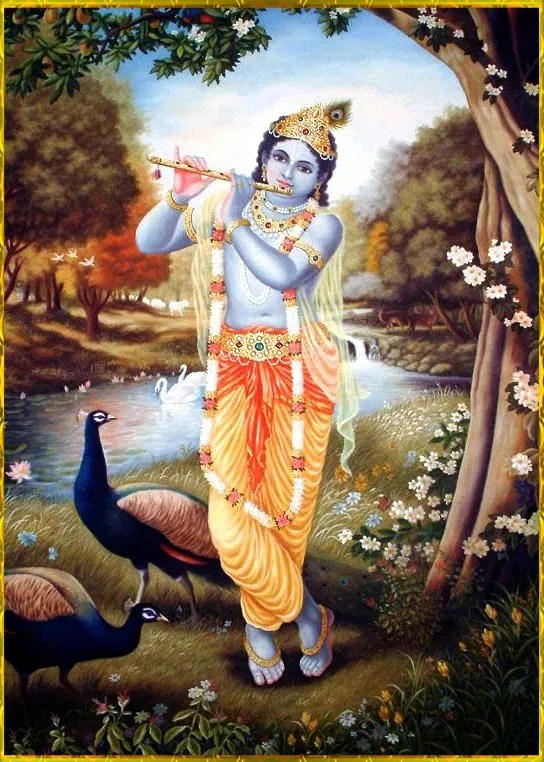
Krishna with a flute: an Adari from Vega? (10)

In Elena Danaan’s book The Seeders the root race of the Taal is introduced, namely the Oyara-Maruu: “7 ft tall humanoids, clear blue skin, black to grey hair. Root race for Taal. The gene seeded first in the Man system (Kepler 62 – Lyra Constellation) was engineerd to adapt to the environmental conditions generated by that particular star’s radiations, and the skin color of the first Taali was clear brown. Throughout the further colonization of Nataru, the natural blue skin genetics often re-emerged” (11, p.128)

See Endnote 128 for more links between ‘Gods’ and various People from the Stars.

UPDATE OCTOBER 2023 In the study groups we have started a few topics on the possible links between the ET-Disclosure Information and information from the Vedas (12,13,14). We were able to track down the place where that ‘ferocious war’ between the Adari and the Ciakahrr took place. According to the Vedas it happened some 3000 BC, and Krishna (an Adari) lost and left our planet. The place where this huge battle took place probably was Dvaraka (15). It would be great if Elena could do an interview with an Adari to provide more info on what transpired.

LINKS
(1) The Summer Triangle
(2) Getting acquainted with the Ahil
(3) The Ciakahrr
(4) Epsilon Eridani
(5) Another fine example of how enormous the differences in distance can be of stars belonging to the same constellation is Orion. At the page on Crop Circles and Binary Messages you can see an image of the various stars and their distances to our sun.
(6) Q & A – Vega (June 1, 2021)
(7) Vega Star Facts of our Future North Star
(8) Danaan, E. (2020) A Gift from the Stars.
(9) The Star Seed Envoy Program
(10) Lord Krishna image collection 1
(11) Danaan, E. (2022) The Seeders
(12) The Alex Collier and Andromedans Study Group – See for instance The Vedas and Modern ET Disclosure and Questions surrounding Polaris
(13) The Vedas talk about Flying Cities. See for more at the bottom of this article: The Excelsior and Solar Warden
(14) How to Create Anti-Gravity? – The vedas mention a method that resembles a description from Elena Danaan.
(15) Here’s a quote from a book by Dr. Richard Thompson (16), where he writes:

“How did Śālva acquire his remarkable vehicle? In view of the controversy regarding agreements between the U.S. Government and aliens, it is noteworthy that Śālva’s vimāna was manufactured by a
technological expert from another planet. Here is the story. (Paśupati and Umāpati are two names of Lord Śiva.)

Having thus made his vow, the foolish King [Śālva] proceeded to worship Lord Paśupati as his deity by eating a handful of dust each day, and nothing more. The great Lord Umāpati is known as “he who is quickly pleased,” yet only at the end of a year did he gratify Śālva, who had approached him for shelter, by offering him a choice of benedictions. Śālva chose a vehicle that could be destroyed by neither demigods [Devas], demons [Asuras], humans, Gandharvas, Uragas nor Rākṣasas, that could travel anywhere he wished to go, and that would terrify the Vṛṣṇis.

Lord Śiva said, “So be it.” On his order, Maya Dānava, who conquers his enemies’ cities, constructed a flying iron city named Saubha and presented it to Śālva. This unassailable vehicle was filled with darkness and could go anywhere. Upon obtaining it, Śālva went to Dvārakā, remembering the Vṛṣṇis’ enmity toward him.

Śālva besieged the city with a large army, O best of the Bharatas, decimating the outlying parks and gardens, the mansions along with their observatories, towering gateways and surrounding walls, and also the public recreational areas. From his excellent airship he threw down a torrent of weapons, including stones, tree trunks, thunderbolts, snakes and hailstones. A fierce whirlwind arose and blanketed all directions with dust. Thus terribly tormented by the airship Saubha, Lord Kṛṣṇa’s city had no peace, O King, just like the earth when it was attacked by the three aerial cities of the demons.” (16, p.199)
(16) Thompson, R. (1993/2017) Parallels: Ancient Insights into Modern UFO Phenomena.